

Copper ore crushing and processing plant
A copper ore crushing and processing plant is designed to extract and process copper from its ores to produce a concentrate suitable for smelting and refining. The process involves several stages, including crushing, grinding, beneficiation, and smelting. Copper is a versatile metal with applications in electrical wiring, plumbing, and various industrial processes. To efficiently extract copper, the ore must go through a series of steps that ensure the final product is of high purity.
1. Crushing Process
The first stage of copper processing begins with crushing the mined ore into smaller pieces. This is typically done using primary crushers like jaw crushers or gyratory crushers. The aim here is to reduce the size of the ore particles to make them manageable for further processing. Jaw crushers are commonly used because of their ability to handle large feed sizes and produce a uniform product size. After primary crushing, the ore is sent to secondary crushers for further reduction.
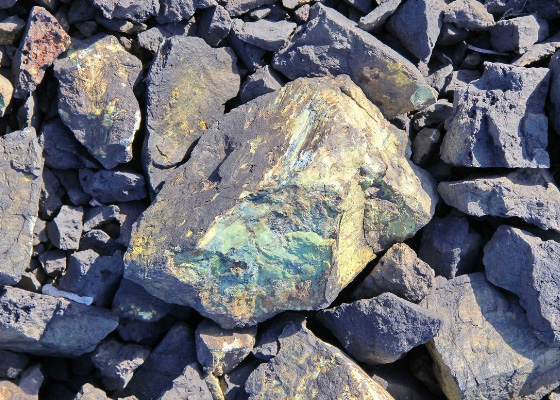
Secondary crushers use a variety of tools to break down the ore further, including cone crushers, impact crushers, and hammer mills. These crushers work by applying force to the ore to fragment it into finer pieces. The ore continues to be reduced in size until it reaches the required particle size for the next stage.
2. Grinding Process
After crushing, the copper ore undergoes grinding to liberate the copper minerals from the gangue. Grinding reduces the ore particles to a fine consistency, making it easier to separate the valuable minerals from the waste. This stage is usually done in a ball mill or a roller mill, where the ore is mixed with water and ground into a slurry. The slurry is then pumped to a classification stage where the fine particles are separated from the coarse ones.
3. Beneficiation Process
Beneficiation is the process where the copper minerals are separated from the rest of the material. This is achieved through various methods such as flotation, gravity separation, or magnetic separation. Flotation is the most commonly used method for copper ore beneficiation. In this process, the finely ground ore is mixed with water to create a slurry, and chemicals called collectors are added. These collectors bind to the copper minerals, making them hydrophobic (water-repellent). Air is then bubbled through the slurry, causing the copper minerals to float to the surface where they can be skimmed off as a froth concentrate. This concentrate contains a higher percentage of copper and is then further refined.
4. Smelting Process
The copper concentrate produced from beneficiation is now ready for smelting. Smelting is the process of heating the concentrate in a furnace to extract pure copper. The concentrate is mixed with a flux (usually limestone or silica) and heated in a blast furnace. The flux reacts with the impurities in the concentrate to form a slag, which can be removed, leaving behind molten copper. The molten copper is then cast into anode plates, which are refined further through electrolysis to produce pure copper metal.
5. Refining Process
The final step in copper processing is refining, which is done through electrolysis. The anode plates from the smelting process are placed in a solution of copper sulfate and sulfuric acid in an electrolytic cell. An electric current is passed through the cell, causing pure copper to deposit on the cathode plates. The impurities, including precious metals like gold and silver, sink to the bottom as a sludge, which can be processed further for additional metal recovery.
Copper ore crushing and processing plants play a crucial role in extracting this valuable metal from its ores. The process from crushing to refining involves multiple steps, each aimed at maximizing copper yield and quality. By using advanced technology and adopting sustainable practices, these plants help meet the global demand for copper while minimizing their environmental footprint.