

Semi-mobile Crusher and Screen
A semi-mobile crusher and screen is a versatile and robust solution for aggregate and mining industries, designed to provide efficient and flexible crushing and screening of various materials such as rocks, ores, and minerals. This equipment combines a crusher and a screening unit on a single platform, making it ideal for use in quarrying, mining, construction, and recycling applications.
What is a Semi-Mobile Crusher and Screen?
A semi-mobile crusher and screen is an integrated system that allows for easy transportation and deployment. It consists of a primary crushing unit, typically a jaw crusher or a cone crusher, mounted on frame structure. This allows the crusher to be moved easily between different locations or work sites. The screen unit, often equipped with multiple decks, is responsible for separating the material into various sizes and grades, enhancing the efficiency of material processing.
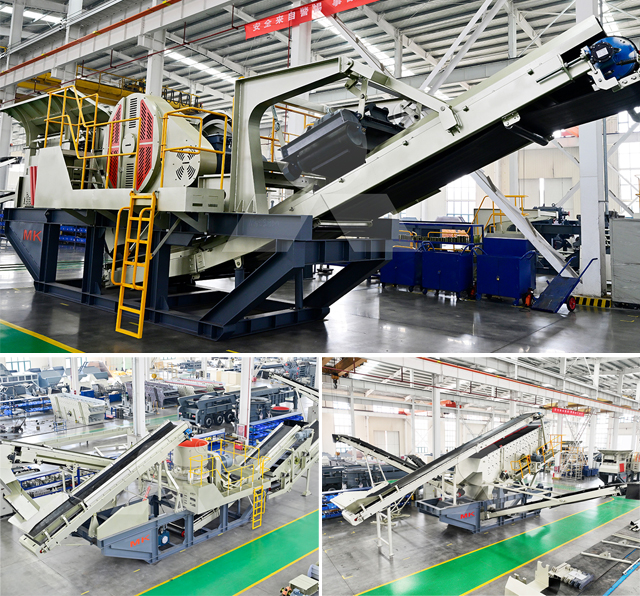
Key Features and Components
A semi-mobile crusher and screen typically comprises several critical components:
- Crusher Unit: This unit can be equipped with different types of crushers including jaw crushers, impact crushers, and cone crushers, depending on the application requirements. The choice of crusher depends on the material’s size, hardness, and abrasiveness. Jaw crushers are preferred for primary crushing due to their ability to handle large feed sizes, while impact crushers are effective for secondary crushing and achieving finer material sizes. Cone crushers are commonly used for tertiary crushing to produce very fine materials.
- Screening Unit: The screening unit consists of one or more screens to separate the crushed material into different grades and sizes. These screens can be equipped with different mesh sizes, enabling the production of a range of aggregate products. The screening unit can also include multiple decks to further classify the material and improve efficiency.
- Conveyor Systems: Semi-mobile crushers and screens are designed with heavy-duty conveyor systems to transport materials between units and to stockpiles. These conveyors are typically adjustable in height and length, allowing for customization according to the site’s specific needs. The ability to move these conveyors in and out of position quickly makes them ideal for changing production requirements.
- Mobility: Unlike fully mobile crushers, semi-mobile systems are not mounted on tracks but are instead placed on sturdy foundations at the production site. This configuration allows the system to be relocated easily using heavy machinery such as cranes and bulldozers. The ability to move the crusher and screen between different sites provides significant operational flexibility, making these systems suitable for temporary operations and sites with limited space.
- Automation and Control Systems: Modern semi-mobile systems are equipped with advanced control systems that facilitate operation, monitoring, and adjustment of the various components. These systems allow operators to manage the entire crushing and screening process from a central control room. Features such as automated start/stop, real-time performance monitoring, and pre-set operating parameters enhance efficiency, reduce downtime, and ensure product quality.
Advantages of Semi-Mobile Crushers and Screens
- Flexibility and Mobility: The primary advantage of semi-mobile units is their ability to be relocated quickly. This reduces setup time and minimizes the logistical challenges associated with moving heavy equipment. These units can be relocated between quarries or work sites without significant disruption, allowing for greater operational flexibility.
- Cost-Effective: Although initially more expensive than fixed crushers and screens, the ability to move the unit between multiple sites makes the investment cost-effective over the long term. Reduced setup times and operational flexibility often translate into lower operational costs compared to traditional fixed crushing plants.
- Adaptability: Semi-mobile systems can be adjusted to handle various materials and production needs. They can be configured to produce specific aggregate sizes, making them adaptable to different project requirements. This versatility makes them suitable for a wide range of applications, including road construction, concrete production, and mineral processing.
Specifications – Technical Data
| Number | Series | Standard Model | Equipment | Equipment | Max. Production Capacity | ||
| Model | Model | Max. Feed Size(mm) | Capacity(t/h) | ||||
| 1 | Primary Crushing Plant | MK75J | FK0936 | PE750X1060 | 630 | 110-250 | 120-280 |
| 2 | MK90J | FK1142 | PE900X1200 | 750 | 150-300 | 150-320 | |
| 3 | MK110J | FK1142 | C6X110 | 760 | 160-400 | 160-420 | |
| 4 | MK125J | FK1345 | C6X125 | 850 | 240-600 | 240-600 | |
| 5 | MK1315C | FK1345 | CI5X1315 | 700 | 200-300 | 230-330 | |
| 6 | MK1415C | FK1345 | CI5X1415 | 900 | 300-500 | 300-500 | |
| 7 | Secondary Crushing and Screening Plant |
MK160H | – | HST160S | 300 | A | A+(30~70) |
| 8 | MK300H | – | HPT300 | 220 | A | A+(30~70) | |
| 9 | MK300HS | SKX1536 | HPT300 | 220 | A | A+(30~70) | |
| 10 | MK500H | – | HPT500 | 300 | A | A+(30~70) | |
| 11 | MK250H | – | HST250S | 350 | 200-450 | 200-450 | |
| 12 | MK1315I | – | PFW1315Ⅲ | 300 | 150-280 | 180-300 | |
| 13 | MK1213I | – | CI5X1213 | 300 | 150-280 | 180-300 | |
| 14 | MK9532V | – | VSI5X9532 | 45 | 180-280 | 180-280 | |
| 15 | MK1145V | – | VSI5X1145 | 45 | 250-360 | 250-360 | |
| 16 | MK1040V | – | VSI6X1040 | 40 | 264-283 | 264-283 | |
| 17 | MK150S-3 | – | 3SKX1560 | 250 | 60-250 | 60-250 | |
| 18 | MK200S-2 | – | 2SKX1860 | 300 | 70-350 | 70-350 | |
| 19 | MK200S-3 | – | 3SKX1860 | 300 | 70-350 | 70-350 | |
| 20 | MK300S-3 | – | 3SKX2160 | 300 | 70-450 | 70-450 | |
| 21 | MK400S-3 | – | 3SKX2460 | 300 | 70-450 | 70-450 | |
| 22 | MK500S-3 | – | 3SKX2475 | 300 | 70-450 | 70-450 | |
| 23 | Two-seat Crushing and Screening Plant |
MK160H-2M | 3SKX1560 | HST160H | 180 | A | A+(30~70) |
| 24 | MK300H-2M | 3SKX1860 | HPT300 | 220 | A | A+(30~70) | |
| 25 | MK250H-2M | 3SKX2160 | HST250H | 215 | A | A+(30~70) | |
| 26 | MK1213I-2M | 3SKX1860 | CI5X1213M | 300 | 150-250 | 150-250 | |
| 27 | MK1315I-2M | 3SKX2160 | CI5X1315 | 300 | 180-300 | 180-300 | |
| 28 | MK9532V-2M | 3SKX2160 | VSI5X9532 | 40 | 180-280 | 180-280 | |
| 29 | MK1040V-2M | 3SKX2160 | VSI6X1040 | 40 | 264-283 | 264-283 | |
| 30 | MK1145V-2M | 3SKX2160 | VSI5X1145 | 45 | 250-320 | 250-320 | |
| 31 | MK300H-2D | HPT300 | HPT300 | 220 | 250-450 | 250-450 | |
| 32 | MK1315I-2D | CI5X1315 | CI5X1315 | 300 | 250-450 | 250-450 | |
| 33 | Combination Crushing and Screening Plant |
MKT70-4 | FK0936 | PE500X750 | 450 | 40-60 | 50-70 |
| 3SKX1545 | PYB900 | ||||||
| 34 | MKT100-4 | FK0936 | PE600×900 | 500 | 35-110 | 70-120 | |
| 3SKX1560 | HST100H1 | ||||||
| 35 | MKT150-4 | FK0936 | PE600×900 | 500 | 65-160 | 130-170 | |
| 3SKX1560 | HST160H1 | ||||||
| 36 | MKT150-3 | FK1142 | CI5X1213M | 550 | 100-170 | 120-190 | |
| 3SKX1560 | |||||||
Any change of the technical data shall not be advised additionally.