

Hydraulic Cone Crusher
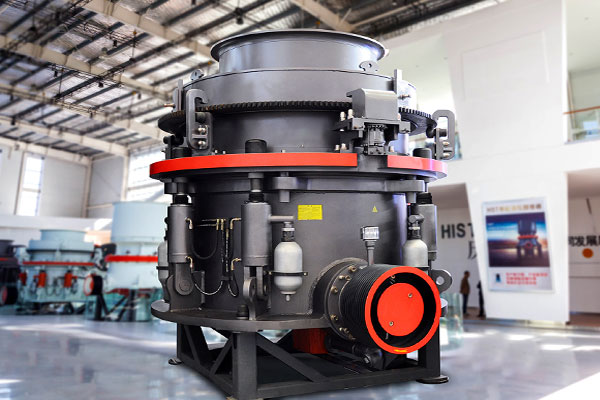
A Hydraulic Cone Crusher is a type of cone crusher that uses hydraulic mechanisms to adjust the crushing process. These crushers are specifically designed to crush harder materials such as rocks, ores, and minerals, offering significant advantages in terms of efficiency, durability, and product quality. Here’s an overview of what makes hydraulic cone crushers notable, their working principle, and key benefits.
Working Principle
Hydraulic cone crushers operate on the principle of reducing materials by compressing them between a fixed cone and a movable cone. The movable cone is mounted on a hydraulic system, allowing for adjustments to the crushing gap based on the size of the material being processed. The crusher’s operation involves a combination of crushing and grinding, with materials being subjected to pressure and friction. As raw material enters the crusher, it is compressed and fractured between the mantle and the concave. The hydraulic system, usually consisting of a hydraulic cylinder, plays a crucial role in adjusting the crusher’s settings. This system can automatically control the discharge opening, preventing excessive wear on the crushing chamber and ensuring a consistent product size.
Key Features and Benefits
- Adjustable Settings: One of the main advantages of hydraulic cone crushers is their adjustability. Operators can easily change the crusher’s settings to achieve the desired product size without stopping the machine. This feature helps in maintaining high efficiency and productivity as the crushing process can be fine-tuned according to the material characteristics and operational requirements.
- Enhanced Safety: The hydraulic system provides enhanced safety features, including overload protection. If foreign objects, such as metal or wood, enter the crushing chamber, the system can automatically adjust the settings to prevent damage to the crusher. This reduces the risk of breakdowns and extends the machine’s operational life.
- High Efficiency: Hydraulic cone crushers are known for their high crushing ratio and high production capacity. They can efficiently handle a wide range of materials, from hard stones like granite and basalt to softer ones like limestone. The ability to adjust the crushing process ensures minimal wastage of materials, maximizing efficiency and output.
- Durability: These crushers are designed with durable components, often using high-quality materials like alloy steel for critical parts. This results in longer operational life and reduced maintenance costs. The hydraulic mechanism allows for easier replacement of worn parts, minimizing downtime and ensuring consistent performance.
- Versatility: Hydraulic cone crushers are versatile and can be used in a variety of applications, including secondary, tertiary, and quaternary crushing stages. They can be used in both stationary and mobile crushing plants, providing flexibility in different mining and quarrying environments.
- Automation Capabilities: Many modern hydraulic cone crushers are equipped with automation features. These systems can monitor and adjust the crushing process in real time, ensuring consistent product quality and optimal performance. The integration of sensors and control systems enables operators to fine-tune the crusher settings remotely, further enhancing efficiency and convenience.
Applications
Hydraulic cone crushers are widely used in the mining, construction, and aggregate industries. They are ideal for crushing hard and medium-hard materials such as ores, rocks, and minerals, making them suitable for use in mines, quarries, and large-scale projects. Their ability to handle large feed sizes and their adaptability to different crushing stages make them an essential part of modern aggregate processing plants.
Specifications – Technical Data
| Model | Cavity (coarse/fine) | Close Side feed opening(mm) | Min CSS (mm) | Capacity (t/h) | Power (kW) |
|---|---|---|---|---|---|
| HPT100 | C1 Extra Coarse | 140 | 19 | 75-140 | 90 |
| C2 Coarse | 100 | 13 | 60-110 | ||
| M Medium | 70 | 9 | 52-100 | ||
| F1 Fine | 50 | 9 | 50-95 | ||
| F2 Extra Fine | 20 | 6 | 45-90 | ||
| HPT200 | C2 Coarse | 185 | 19 | 145-250 | 160 |
| M Medium | 125 | 16 | 135-235 | ||
| F1 Fine | 95 | 13 | 115-220 | ||
| F2 Extra Fine | 75 | 10 | 90-190 | ||
| F2 Extra Fine | 80 | 10 | 110-240 | ||
| HPT300 | C1 Extra Coarse | 230 | 25 | 220-440 | 250 |
| C2 Coarse | 210 | 19 | 190-380 | ||
| M Medium | 150 | 16 | 175-320 | ||
| F1 Fine | 105 | 13 | 145-280 | ||
| F2 Extra Fine | 80 | 10 | 110-240 | ||
| HPT400 | C1 Extra Coarse | 295 | 30 | 300-630 | 315 |
| C2 Coarse | 251 | 25 | 285-560 | ||
| M Medium | 196 | 20 | 250-490 | ||
| F1 Fine | 110 | 13 | 180-345 | ||
| F2 Extra Fine | 90 | 10 | 135-320 | ||
| HPT500 | C1 Extra Coarse | 330 | 38 | 425-790 | 400 |
| C2 Coarse | 290 | 30 | 370-700 | ||
| M Medium | 210 | 22 | 330-605 | ||
| F1 Fine | 135 | 16 | 270-535 | ||
| F2 Extra Fine e | 95 | 13 | 220-430 | ||
| HPT800 | C1 Extra Coarse | 350 | 38 | 570-1200 | 630 |
| C2 Coarse | 299 | 32 | 520-1050 | ||
| M Medium | 265 | 25 | 475-950 | ||
| F1 Fine | 220 | 16 | 370-800 | ||
| F2 Extra Fine | 150 | 13 | 310-600 |