

Calcite crushing and processing plant
A calcite crushing and processing plant is designed to crush and process calcite, a carbonate mineral composed primarily of calcium carbonate (CaCO3). This plant plays a crucial role in the production of various high-quality industrial materials, including construction aggregates, fillers for paints and plastics, and agricultural lime. The process involves several stages, including crushing, grinding, and separation, to produce the desired particle size and quality of the final product.
1. Crushing Process
The first step in the calcite processing plant is the crushing of raw calcite ore. This stage typically begins with the use of a primary crusher, such as a jaw crusher, to reduce the size of the calcite stones to a manageable size for further processing. The jaw crusher is effective at breaking down large rocks into smaller pieces with consistent particle size, which is crucial for the subsequent stages of processing.
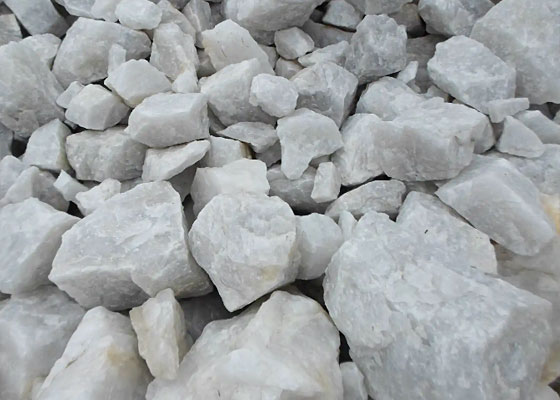
After primary crushing, the crushed calcite material is transferred to a secondary crushing system. This may involve the use of cone crushers or impact crushers, which provide finer control over the final particle size. Cone crushers are particularly useful for producing a uniform product with a specific size distribution. Impact crushers, on the other hand, are often used when a higher reduction ratio is required, as they can break down the material into smaller sizes more quickly.
2. Grinding Process
Following crushing, the material moves to the grinding stage. Here, the crushed calcite is ground to a fine powder using mills, such as ball mills or roller mills. The grinding process is essential to produce a material with a specific fineness, which is necessary for its use in various applications. The size of the final product can be adjusted by selecting appropriate grinding media and mill settings. For instance, to produce fine calcite powder for use in paints, plastics, or fillers, the material may need to be ground to a particle size of less than 10 micrometers.
3. Separation and Classification
After grinding, the material is subjected to separation and classification processes. This step involves the use of air classifiers, cyclones, or screening equipment to separate the fine powder from coarse particles. The desired product size distribution is achieved by adjusting the parameters of the classifier, such as airflow rate and screen size. The coarse particles may be recycled back into the grinding mill to achieve the required fineness.
4. Final Processing and Packaging
The final step in the calcite processing plant involves packaging and storing the processed calcite for distribution. The product is often stored in silos or bins, from where it can be easily transported to customers in bulk or packaged in smaller bags. The quality of the product can be controlled by regular testing to ensure consistency in chemical composition and particle size distribution.
Maintenance and Optimization:
Regular maintenance is crucial to ensure the smooth operation of the calcite crushing and processing plant. This includes routine checks on crushers, screens, grinding mills, and other equipment. Proper maintenance helps extend the life of equipment and reduces downtime. Plant optimization is also a continuous process, involving adjustments to crusher settings, grinding parameters, and classification techniques to improve efficiency and product quality.