

Specifications and capacity of cone crusher
A cone crusher is a widely used type of crushing equipment that is commonly found in mining, quarrying, and construction industries. It operates by compressing material between a moving cone (known as the mantle) and a stationary cone (called the bowl liner). Cone crushers are ideal for crushing hard and abrasive materials like granite, basalt, and ores such as copper, iron, and gold.
1. Crushing Principle
Cone crushers work on the principle of compression, where the material to be crushed is fed into the chamber formed between a fixed and a moving cone. The moving cone (also called the mantle) oscillates inside the fixed cone (the concave) to reduce the material size by squeezing it between the cones. As the material is compressed, it is broken down into smaller fragments, which are then expelled through the bottom of the crusher.
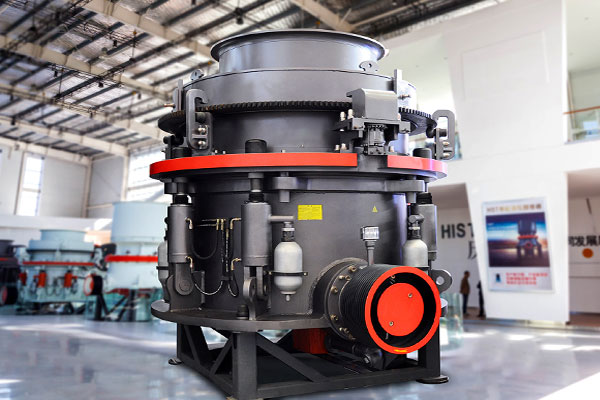
2. Key Specifications of a Cone Crusher
- Feed Size: The maximum size of material that can be fed into the cone crusher is an important specification. The feed size is usually measured in inches or millimeters, and the capacity of the cone crusher can be significantly influenced by the size of the feed material.
- Discharge Size (Product Size): The output size (product size) is adjustable and typically ranges from fine to coarse material, depending on the crusher settings. The output size is determined by the spacing between the mantle and the concave.
- Capacity: Capacity refers to the volume of material that can be processed by the crusher per unit of time. It is usually measured in tons per hour (TPH). The capacity depends on several factors, including the feed size, material hardness, desired product size, and the setting of the cone crusher.
- Motor Power: Cone crushers are typically powered by electric motors or diesel engines, depending on their size and application. The motor power is specified in horsepower (HP) or kilowatts (kW), and it determines how much force the cone crusher can generate to break down material.
- Hydraulic System: Many modern cone crushers feature a hydraulic system that allows for automatic adjustment of the crusher’s settings, ensuring optimal performance and reducing the risk of damage to the machine from uncrushable material.
- Chamber Design: Cone crushers can have different chamber designs (e.g., fine, medium, coarse). The choice of chamber design influences the quality of the product and the overall capacity of the crusher. A finer chamber will generate finer output, whereas a coarser chamber will produce larger material.
3. Capacity of Cone Crushers:
The capacity of a cone crusher is determined by several factors, including the size of the crusher, the type of material being processed, and the operational settings (such as the closed-side setting).
- Feed Capacity: Cone crushers can process a wide range of materials, from hard rocks like granite and basalt to softer materials like limestone. Typical feed capacities range from 50 tons per hour (tph) for smaller models to 2,500 tph or more for larger machines.
- Production Output: Output capacity depends on factors like feed size, material hardness, and the machine’s settings. For example, a medium-sized cone crusher with a 150-200 mm feed can typically produce 100-400 tph, while a larger model may produce 500-1,000 tph or more.
- Product Size: Cone crushers produce material sizes in a range of 1-8 mm or more, depending on the settings. The typical output size ranges from 0-40 mm for secondary crushers, while tertiary crushers typically output 0-20 mm material.
4. Other Features and Advantages
- Efficient Material Handling: Cone crushers are capable of handling a wide range of material types, from soft ores to very hard rock.
- Advanced Automation: Some cone crushers come with advanced automation systems that monitor and adjust performance to ensure consistent throughput and product quality.
- Low Operating Cost: Thanks to efficient design and low maintenance requirements, cone crushers can offer a relatively low cost per ton of material processed.
- Compact Design: Modern cone crushers have a compact footprint, making them ideal for operations with limited space.
Cone crushers are highly efficient machines for crushing hard and abrasive materials. Their design allows them to deliver a high output while producing finely crushed material. With various sizes and configurations available, they can handle a broad range of capacities from small-scale operations to large industrial plants. The key to selecting the right cone crusher lies in understanding your required output, feed size, and material properties.