

Magnetite ore beneficiation crushing line
Magnetite ore, a type of iron ore with a high iron content, plays a significant role in the global iron industry. Beneficiation of magnetite ore is a crucial step in the extraction of iron from the ore to produce high-quality iron concentrate, which is used in various industrial applications, particularly in steel production. This is achieved through a series of crushing and beneficiation steps designed to reduce the particle size, separate valuable minerals from gangue, and concentrate the iron content.
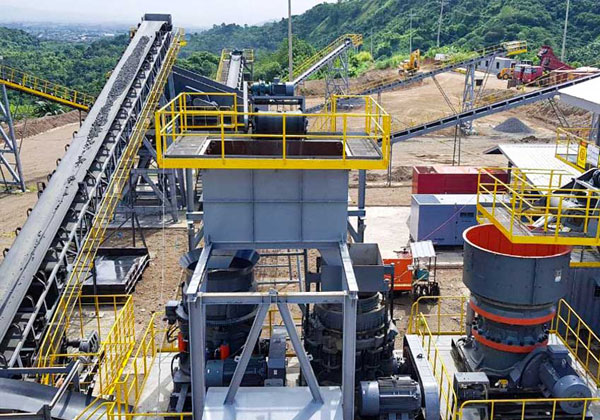
Crushing Process in Magnetite Ore Beneficiation
The beneficiation of magnetite ore begins with its crushing. The primary goal of this stage is to reduce the large chunks of ore into smaller particles to facilitate further processing.
- Primary Crushing: The raw magnetite ore is fed into a jaw crusher for primary crushing. Jaw crushers are designed to break down large rocks into smaller pieces, typically reducing the ore to a size that is manageable for the next stages. In the case of magnetite, the typical output size is around 10-15 cm, depending on the ore’s hardness and the crusher settings.
- Secondary Crushing: After the primary crushing, the material is conveyed to a cone crusher or impact crusher. These crushers provide a finer reduction, crushing the material down to 2-5 cm. Secondary crushers are particularly important for controlling the particle size distribution, which can affect the efficiency of subsequent beneficiation steps.
- Tertiary Crushing: In some magnetite beneficiation lines, a tertiary crusher, such as a vertical shaft impact (VSI) crusher, is used to achieve further reduction in particle size. This ensures that the ore is reduced to the necessary size for effective milling and separation.
Beneficiation Techniques
After crushing, magnetite ore undergoes various beneficiation processes to separate the iron-rich particles from impurities and other unwanted materials.
- Grinding: The crushed ore is then ground in a ball mill to a finer particle size. Grinding is crucial as it helps liberate the magnetite from the gangue minerals. The target is to achieve a particle size that allows for effective separation, typically around 75 microns.
- Magnetic Separation: Since magnetite is magnetic, magnetic separation is the primary method for beneficiation. After grinding, the ore is passed through high-intensity magnetic separators, which attract and collect the magnetite particles, while the non-magnetic materials, such as silica and alumina, are discarded. This step significantly increases the iron content of the ore.
Magnetite Ore Beneficiation Crushing Line Design
A typical magnetite ore beneficiation crushing line involves several stages:
- Feeding: Ore is loaded into feeders that regulate the flow into crushers and mills.
- Crushing and Screening: This includes jaw, cone, and impact crushers that progressively reduce the particle size of the ore, as well as screens that separate different sizes of material.
- Grinding and Classification: A ball mill is used to grind the ore to the desired size, followed by classifiers (such as hydrocyclones) that separate fine particles from coarse ones.
- Magnetic Separation: Magnetic separators are used to separate magnetite from gangue.
- Concentration: The magnetite concentrate is then further refined to remove additional impurities.
The beneficiation of magnetite ore involves several stages, from crushing and grinding to magnetic separation and concentration. Each step is crucial in ensuring that the final product is of high quality and suitable for industrial use. By utilizing modern beneficiation techniques, such as high-efficiency crushers, grinding mills, and advanced magnetic separation systems, mining companies can extract and process magnetite ore efficiently, contributing to the global demand for iron and steel.