

Hematite crushing and processing plant
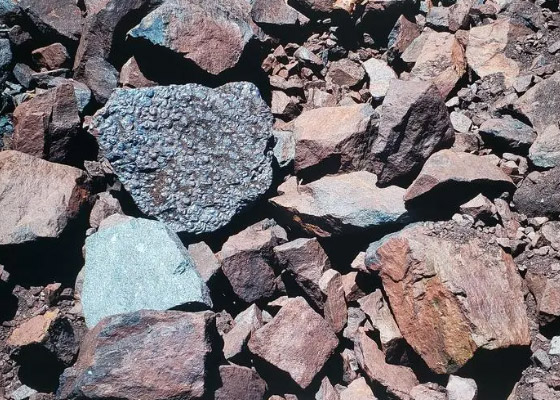
Hematite (Fe₂O₃) is one of the most abundant and important iron ores in the world, commonly used in steel manufacturing and other industrial applications. Hematite is typically crushed and processed to extract the iron content and produce a higher-grade material for smelting. This process involves several stages, from crushing and screening to beneficiation, aimed at improving the ore’s quality and making it suitable for use in various industries.
1. Crushing
The first stage in a hematite processing plant is the crushing of the ore. Hematite deposits vary in size, shape, and hardness, so crushers are chosen based on the characteristics of the ore. Typically, jaw crushers and cone crushers are used in the initial stages to break down the ore into smaller, more manageable pieces.
- Primary Crushing: In the primary crushing phase, the mined hematite ore is loaded onto a feeder and transported to a jaw crusher or primary gyratory crusher. The crusher reduces the size of the ore to around 100–200 mm in diameter, making it suitable for further processing.
- Secondary Crushing: After primary crushing, the ore is sent to a secondary crusher, usually a cone crusher or impact crusher, to reduce the particle size further. The material is then crushed to about 20 mm or smaller, which is ideal for beneficiation.
2. Screening and Classification
Following crushing and grinding, the next step is screening and classification. This involves separating fine materials from coarser particles to ensure uniformity for the next processing stages.
- Screening: The material is passed through vibrating screens to separate oversized and undersized materials. Oversized particles are sent back for further crushing, while the undersized materials proceed to the next stage.
- Classification: The separated materials are classified based on their size, with finer particles undergoing gravity separation or flotation processes.
3. Beneficiation
The goal of beneficiation is to improve the iron content and remove impurities such as silica, alumina, and phosphorus. Hematite ore beneficiation typically includes the following techniques:
- Gravity Separation: Hematite is denser than many of the impurities, so gravity separation techniques such as jigs, spirals, or shaking tables are often used to concentrate the ore. This step separates the heavier iron-rich material from the lighter waste.
- Magnetic Separation: Hematite is a magnetic mineral, which makes magnetic separation a highly effective method for beneficiation. Low-intensity magnetic separators (LIMS) are used to extract the iron-rich material from the ore.
- Flotation: In some cases, flotation is used to separate fine hematite particles from gangue materials. In this process, chemicals are added to create bubbles that allow the hematite to float to the surface for collection.
4. Drying and Pelletizing
Once the hematite has been concentrated, it is often dried to remove moisture, which is especially important in pelletizing. The dried hematite is then mixed with binder materials to form pellets. These pellets are heated in a furnace to create high-grade iron ore suitable for smelting in blast furnaces or other processes.
- Pelletizing: The dried and concentrated hematite is mixed with a binder (usually clay or limestone) and rolled into small pellets, which are then fired in a rotary kiln at temperatures between 1,200–1,400°C. The pellets undergo hardening during this process, making them suitable for the blast furnace or direct reduction processes.
Hematite crushing and processing plants play a crucial role in providing high-quality iron ore for industrial applications. The final product, often in the form of iron pellets, is ready for use in steelmaking or other processes that require high-purity iron.