

Specifications of limestone crushing plant
A limestone crushing plant typically includes several key components designed for effective mining and processing. First, it begins with a feeding system, which can be a vibrating feeder or apron feeder, delivering the limestone to the crusher. The feeder ensures the even distribution of material into the primary crushing unit. This section is crucial as it prepares the raw material for the subsequent crushing and grinding stages. The capacity of the feeding system is designed to match the plant’s output requirements and to minimize material handling time.
The second component is the primary crusher, typically a jaw crusher or gyratory crusher. This crusher is responsible for reducing the size of the incoming limestone from large chunks into smaller, manageable pieces. The output size of the limestone is usually set by adjusting the settings of the jaw or gyratory crusher. The size of the output will depend on the final product specification, such as gravel, sand, or other aggregates. The primary crusher is usually selected based on the hardness, abrasiveness, and size of the limestone to be processed.
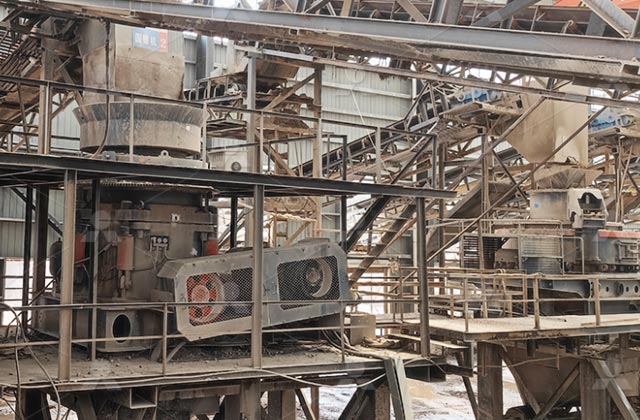
After primary crushing, the secondary crushing stage follows. Here, the material is fed into a secondary crusher, often a cone crusher, which further reduces the material’s size. The secondary crusher helps produce uniform, smaller-sized aggregates by breaking down the larger pieces from the primary crusher. This stage allows for greater flexibility in the plant’s output and helps achieve the desired product gradation. A vibrating screen is also used at this stage to separate finer particles before further processing or stockpiling.
A screening system is an essential part of the plant, especially for separating different particle sizes. After the secondary crushing stage, the material passes through a series of screens that separate it into various size fractions, such as fines, medium-sized aggregates, and larger pieces. The screened material is then directed to different stockpiles or directly to other processing equipment depending on the plant’s design. The screens may include vibratory or rotary screens and are adjustable based on the desired output size and capacity.
Finally, a dust control system is crucial in a limestone crushing plant to manage emissions and ensure compliance with environmental regulations. Dust generated during the crushing, screening, and handling processes is controlled by dust suppression systems, including water sprays or fabric filters. These systems are designed to minimize environmental impact by reducing airborne particles, thus ensuring that the plant operates safely and meets air quality standards. Additionally, the plant may include a conveyor system for transporting crushed material between different stages, enhancing overall efficiency.