

artificial sand making process pdf
The process of artificial sand making involves the production of sand from stones or rocks that are crushed to create fine aggregates. Unlike natural sand, which is sourced from rivers, seas, and lakes, artificial sand is manufactured through the crushing of rocks such as granite, basalt, or limestone. The main objective of artificial sand production is to meet the increasing demand for quality sand in the construction industry, where natural sand is becoming scarce due to environmental concerns and over-exploitation.
Step 1: Crushing of Raw Materials The first step in artificial sand production is the extraction of raw materials, typically rocks or boulders. These materials are fed into crushers, which break them down into smaller pieces. The crushing process involves multiple stages. In the primary stage, larger rocks are fed into jaw crushers that break them into medium-sized particles. Next, the materials move into secondary crushers, such as cone crushers or impact crushers, which further break down the stones into finer particles.
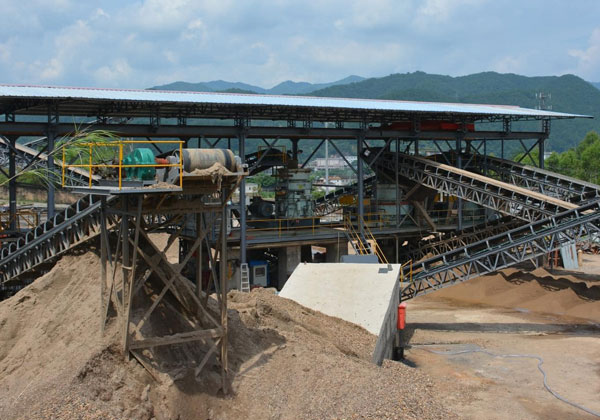
Step 2: Screening and Grading After the crushing process, the resulting material is screened to separate different sizes of aggregates. This is done using a vibrating screen. The screened sand is then sorted into various fractions such as fine aggregates (0-5 mm), medium aggregates (5-10 mm), and coarse aggregates (10-20 mm). The finer fractions are used to produce artificial sand, while the coarser fractions can be used for other purposes like road construction or filling.
Step 3: Washing and Cleaning One of the crucial steps in producing quality artificial sand is the washing and cleaning process. The crushed materials contain impurities such as clay, dust, and silt that need to be removed to ensure the purity and quality of the final product. This is typically done using a sand washing machine, which helps to clean the sand by removing unwanted materials. This step also improves the particle shape, making the sand suitable for use in concrete and other construction applications.
Step 4: Grading and Shaping To achieve the desired consistency, the washed sand undergoes grading and shaping. This step involves controlling the size and shape of the particles. The production of artificial sand is aimed at mimicking the properties of natural sand, such as grain size distribution and texture. For this reason, VSI (Vertical Shaft Impactor) crushers are often used in artificial sand production. VSI crushers produce cubical-shaped grains, which have a better bonding capacity in concrete and other mixtures.
Step 5: Final Product and Applications Once the artificial sand is produced, it is ready for use in various construction applications. The final product has a high level of consistency, making it ideal for use in concrete, mortar, and asphalt production. The quality of artificial sand can be controlled to meet specific requirements, such as particle size, gradation, and cleanliness. In addition to construction, artificial sand is also used in the production of precast elements, road base materials, and as a filler in cement production.
The artificial sand making process, though intricate, plays a vital role in meeting the growing demand for sand in the construction industry. It not only helps to conserve natural resources but also provides a sustainable solution for construction projects where high-quality sand is required.