

Screening machines for different crushed stone sizes
Screening machines play a crucial role in the mining and aggregate industries, as they are used to separate crushed stones into different size fractions for various applications. These machines ensure that the crushed material meets the required specifications for further processing, whether it’s for construction, road building, or industrial use. There are several types of screening machines designed to handle various crushed stone sizes. In this article, we will explore these machines and their importance in the process.
Types of Screening Machines: Vibrating Screens
Vibrating screens are the most commonly used screening machines in the aggregate industry. They consist of a screen mesh that vibrates, causing the materials to be sorted by their size. Vibrating screens are versatile and can handle different types of crushed stones, including fine aggregates, medium-sized, and coarse aggregates. They are available in different configurations, such as single-deck, double-deck, or triple-deck screens. These machines can separate materials into multiple sizes simultaneously, making them highly efficient.
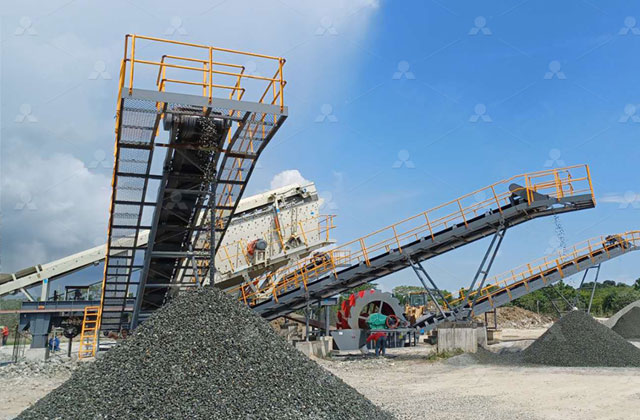
Application: Vibrating screens are used for screening crushed stone into various grades such as fine, medium, and coarse aggregates.
Advantage: High capacity, good efficiency, and multiple separation sizes.
How Screening Machines Work
The screening process involves feeding the crushed stone into a screen deck, which is typically made of wire mesh or perforated plates. The material moves across the screen either by vibration or rotation, and as it travels, it is sorted according to size. Smaller particles pass through the holes in the screen, while larger particles remain on top. The materials are then discharged from the screen at different points based on their size, with larger stones typically being sent for further processing, such as crushing or washing, while smaller stones are used for fine aggregate applications.
Importance of Proper Screening
Proper screening is crucial for ensuring the consistency and quality of crushed stone products. The desired size fraction for a specific application (such as concrete, asphalt, or drainage systems) must be accurately separated to meet specifications. Effective screening also ensures the removal of undesirable fines, dust, or oversized particles, improving the quality of the final product.
In addition to improving material quality, screening also helps in optimizing the efficiency of the crushing and washing processes. By accurately separating different size fractions, screening machines reduce wear and tear on crushers and help in producing a higher yield of usable material.
Screening machines play a crucial role in ensuring that crushed stone is sorted and separated into various sizes that meet industry specifications. By choosing the right machine based on material type, capacity, and separation accuracy, companies can improve efficiency, reduce operational costs, and enhance product quality.