

Manganese ore crushing and processing plant
Manganese ore processing involves a series of steps to extract and purify manganese from its ores. The process typically includes crushing, grinding, and beneficiation to produce high-purity manganese. Manganese is a key mineral used in various industries, particularly in the production of steel, batteries, and alloys due to its strength, resistance to wear, and ability to improve the hardness and toughness of metals. Here’s an overview of the process and the machinery involved in setting up a manganese ore crushing and processing plant.
1. Crushing Process:
The first step in the manganese ore processing is the crushing of the raw ore. This stage reduces the size of the manganese ore particles to facilitate subsequent processing stages. The raw ore is fed into crushers,such as a jaw crusher or a gyratory crusher, to reduce the size of the material. The primary crusher breaks down large chunks of ore into smaller, manageable pieces, typically ranging from 6 inches to 12 inches in size. This stage is crucial as it prepares the ore for the subsequent stages of processing.
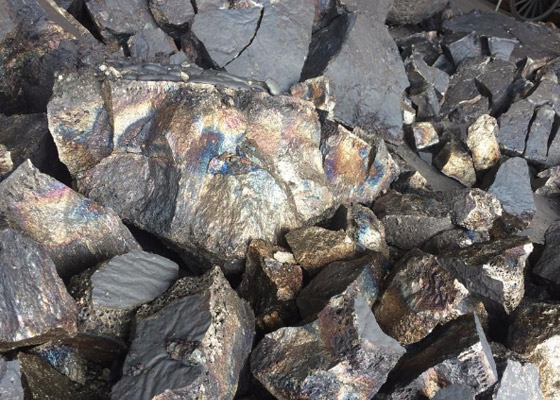
After the primary crushing, the material is sent to a secondary crusher to achieve even finer sizes. Cone crushers and impact crushers are commonly used for secondary crushing. The goal is to reduce the ore size further, usually to less than 2 inches. This ensures efficient handling and improves the performance of the subsequent beneficiation processes.
2. Grinding Process:
The coarser fraction of the screened material is further ground in a grinding mill, such as a ball mill or a roller mill. The goal of grinding is to liberate the manganese minerals from the surrounding gangue material. The grinding process reduces the ore to a fine particle size, typically between 50 and 100 mesh, which maximizes the efficiency of subsequent separation processes. The finely ground material is then mixed with water to form a slurry, which is ready for the beneficiation stage.
3. Beneficiation Process:
The next step in the manganese ore processing plant is beneficiation, which involves separating valuable minerals from the waste material. Beneficiation methods vary depending on the ore type and include gravity separation, magnetic separation, and flotation. Gravity separation is commonly used for manganese ores with a higher density, where dense manganese particles are separated from the lighter gangue materials using spirals, jigs, or shaking tables. Magnetic separation is used when the manganese ore has a high iron content, utilizing magnetic fields to separate the iron-bearing minerals from the manganese. Flotation is used for ores that are not easily separated by gravity or magnetic methods, where collectors, frothers, and modifiers are added to promote the attachment of manganese minerals to bubbles.
4. Dewatering and Drying:
The final step in the processing of manganese ore involves dewatering and drying. After beneficiation, the ore is dewatered using filters and screens to reduce the moisture content to a level that is suitable for further processing or shipping. Dewatering is crucial to minimize transportation costs and prepare the ore for subsequent steps such as sintering, briquetting, or chemical leaching. After dewatering, the ore is dried using dryers that remove any remaining moisture. This step ensures the ore can be handled and processed efficiently in subsequent stages.
5. Final Products:
The processed manganese ore can then be used in various industries. For steel production, high-purity manganese ore is used to produce manganese alloys such as ferromanganese and silicomanganese, which improve the strength, hardness, and durability of steel. In the battery industry, high-purity manganese is used to produce lithium-ion batteries and other energy storage devices. The final products from manganese ore processing plants vary based on the intended use and the quality of the ore.
Setting up a manganese ore crushing and processing plant requires careful planning and investment in appropriate machinery, such as crushers, grinding mills, and beneficiation equipment. The goal is to maximize recovery and quality while minimizing waste and production costs. Advances in technology and process optimization continue to improve the efficiency and effectiveness of manganese ore processing, making it possible to produce high-quality materials for a wide range of applications.