

River pebble crushing and processing plant
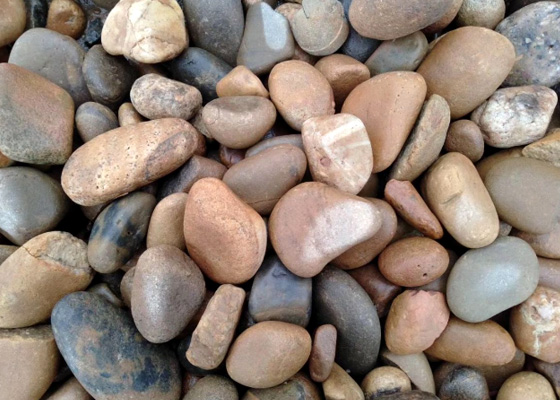
River pebble, a type of sedimentary rock, is widely used in construction and infrastructure projects due to its durability, hardness, and smooth texture. The process of crushing and processing river pebbles involves several stages, including primary crushing, secondary crushing, screening, and sand making. This process transforms raw river pebble material into high-quality aggregate and manufactured sand suitable for various applications.
Crushing Stages
- Primary Crushing: The first stage of processing river pebble is primary crushing, where large rocks are reduced to smaller sizes. Typically, a jaw crusher is used for this purpose. The river pebbles are fed into the crusher, where they are broken down into smaller pieces. The primary crushing stage reduces the rock to sizes ranging from 100 mm to 300 mm. Jaw crushers are preferred due to their ability to handle large feed sizes and provide a consistent product size.
- Secondary Crushing: After primary crushing, the material is transferred to the secondary crushing stage, where it undergoes further reduction in size. Cone crushers are commonly used in this stage because of their ability to produce a finer product. The crushed material from the jaw crusher is fed into the cone crusher, where it is broken down into smaller particles, typically between 10 mm and 50 mm in diameter. This stage further refines the aggregate and ensures uniformity in particle size, which is crucial for producing high-quality concrete and asphalt.
- Screening: Once the material is crushed to the desired size, it is sent to a vibrating screen for separation and classification. The screen sorts the crushed material into different sizes, ensuring that the product meets specific standards. Larger particles are sent back to the secondary crusher for further reduction, while the desired particle sizes are conveyed to the next stage in the process. This stage is critical for producing consistent and high-quality aggregate and manufactured sand.
- Sand Making: The final stage of the river pebble processing plant involves sand making. This stage uses specialized equipment, such as vertical shaft impact crushers (VSIs), to produce manufactured sand. VSIs operate by accelerating material to high speeds in a rotor, where it is then thrown against an impact surface, breaking the material into smaller particles. This process helps in achieving a well-graded product with good particle shape and size distribution. The sand produced is suitable for use in construction, concrete production, and other industrial applications.
Final Product and Applications
The final products from a river pebble crushing and processing plant include various grades of crushed aggregate, sand, and gravel. These materials are widely used in construction, including as road base materials, concrete aggregate, asphalt aggregate, and for drainage purposes. The quality of the final product is influenced by factors such as particle shape, size distribution, and cleanliness, which are controlled through the selection of equipment and processing techniques.