

About cone crusher technology
Cone crushers are among the most commonly used equipment in the mining and construction industries. Their primary function is to reduce the size of rocks or ores through compression, and they are typically used in secondary, tertiary, or quaternary crushing stages. Over the years, cone crusher technology has evolved significantly, improving their efficiency, productivity, and versatility in various crushing applications. Below is a comprehensive overview of cone crusher technology, focusing on its working principle, design advancements, and future trends.
Working Principle of Cone Crusher
The fundamental working principle of a cone crusher involves the movement of a conical mantle that crushes material against a concave surface. The crusher consists of a mainframe, a shaft, a mantle, a concave, and an eccentric mechanism. As the cone crusher operates, the mantle rotates within the concave, exerting compression on the material. The material is then broken into smaller pieces by the crushing force.
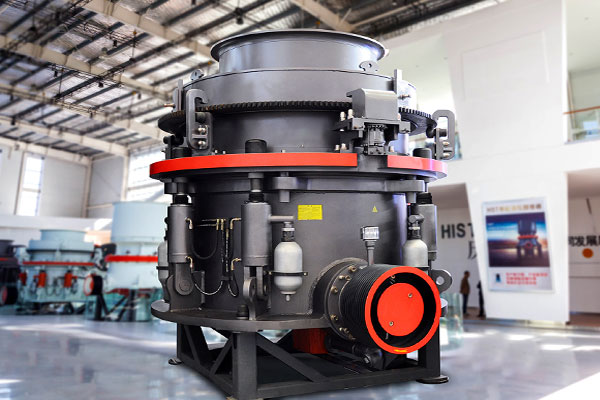
The movement of the mantle is achieved through an eccentric drive, where the shaft moves in a circular motion, causing the mantle to gyrate. This motion allows the material to pass through the crushing chamber in a controlled manner. The size of the material is determined by the gap between the mantle and concave, which can be adjusted according to the desired output size.
Key Components of a Cone Crusher
- Mantle and Concave: These are the two main crushing components. The mantle rotates around the axis of the cone and comes into contact with the stationary concave liner to crush the material. The distance between the mantle and concave determines the size of the output product.
- Countershaft Assembly: This is responsible for the driving mechanism that enables the mantle to rotate. It is linked to the motor by a series of belts or driveshafts.
- Hydraulic System: Modern cone crushers utilize hydraulic technology to adjust the position of the cone and to relieve any overload conditions. This system is used to control the gap between the mantle and concave, allowing the operator to fine-tune the crusher’s output size or to release any trapped material.
- Drive Mechanism: Most cone crushers are powered by an electric motor connected to a drive system that rotates the shaft and mantle. The drive system can vary, with some machines using a direct drive and others relying on belts or hydraulic drives.
- Discharge Opening and Adjustment: Cone crushers often feature a hydraulic mechanism to adjust the size of the discharge opening. This allows operators to control the size of the final product and achieve the desired material specifications.
Cone crushers are vital pieces of equipment in the mining and construction industries, and their technology continues to evolve to meet the demands of modern production processes. Innovations such as automation, material enhancements, and precise control systems have significantly improved the efficiency, durability, and versatility of cone crushers. As industries continue to demand higher productivity and lower operational costs, the development of cone crusher technology will likely focus on further improving energy efficiency, performance, and ease of maintenance.